
From a second-hand EV9 to our own booking entity
This is how our small IT company on Bribie Island became a booked-hire operator in 2026. The dates come from our certificates and the history of the code. Where something went wrong, I’ve said so. That’s most of what’s useful to you.
Everything up to 30 September 2026 was concept and build. We designed the booking system, built it and tested it. It began running under our own booking entity authorisation on 30 September.
We’ve left out what should stay private: our income, our riders, and anything about me that isn’t already public. The dates are real, but they are not a guide to yours: every application is assessed on its own, and TMR publishes no processing time for new BEAs.
Chapter 1. The car Concept and build: late July to mid-August 2026
- Late Jul 2026. We buy our car second-hand: a 2023 Kia EV9 Air, a seven-seater. We checked the car’s history before buying.
- 3 Aug 2026. The EV9 is registered to the company for commercial use.
- 7 Aug 2026. TMR issues booked hire service licence 285467 for the car.
- 15 Aug 2026. We move the house to a time-of-use EV electricity plan with Alinta (8c a kilowatt-hour from midnight to 6 am, 39.9c from 4 to 8 pm on weekdays, 2c for solar we export) and build the first automation to charge the car at the right times. Story: charging an EV9 off the roof →
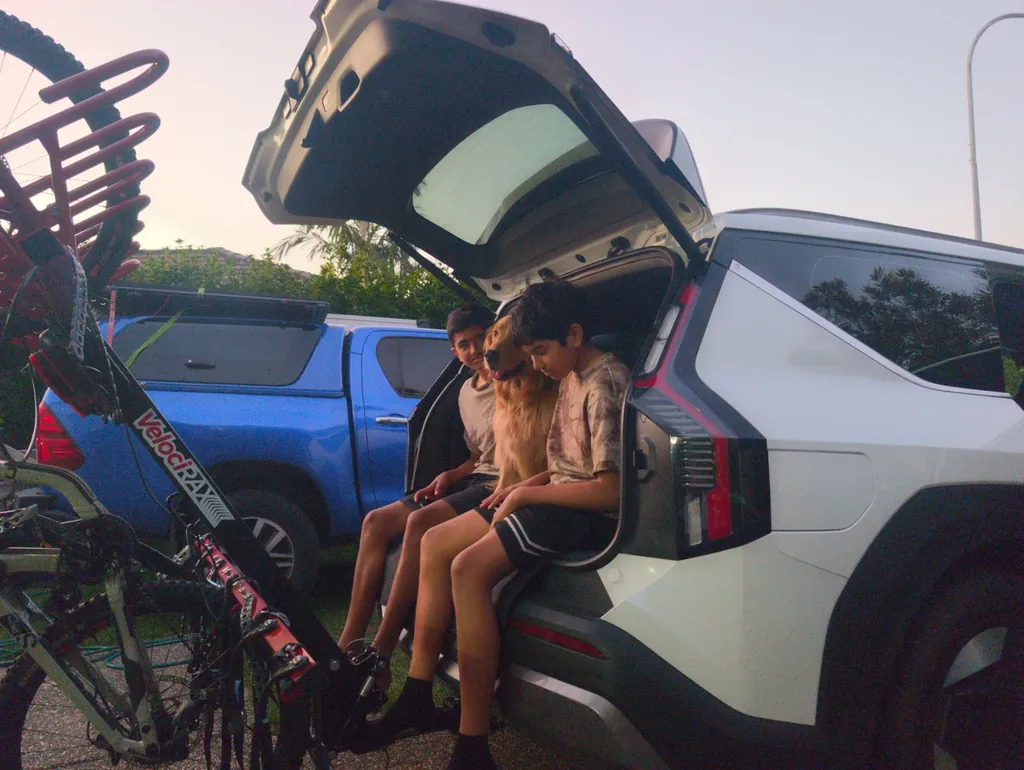
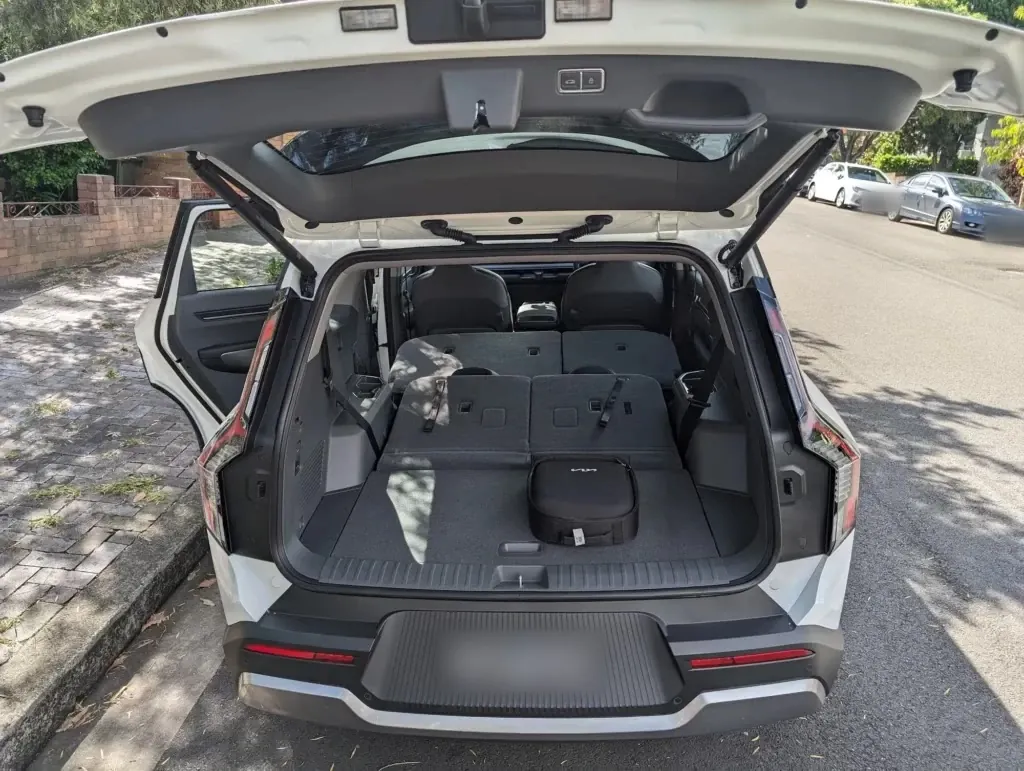
Why an electric seven-seater? It’s quiet, it’s easy to get into, and there’s room behind the second row for a walker, a folding wheelchair or a dog. I don’t offer the third row to older riders, so in practice it carries four passengers, not six.
Bruce Muir, DyCom Group Queensland
Chapter 2. The driver, and the plan Concept and build: 21 to 22 August 2026
- 21 Aug 2026. TMR grants me an interim driver authorisation in the booked hire and taxi category. The interim authority is what lets you drive while your card is made.
- 22 Aug 2026. I write down what the booking system must do, and what it must never do.
Chapter 3. The build, and the first Uber trip Concept and build: 23 to 29 August 2026
- 23 Aug 2026. The first day of building, and a long one:
- 9:10 am, the first code. By 9:23 the database is refusing to let anyone edit or delete a booking’s history, and we have tested that it refuses. Story: the record nobody can edit →
- The first AI review of the code finds 12 problems. All 12 are fixed by 9:47 am.
- The system goes up on our own server in Queensland, where we build and test it from then on. Story: hosted in Queensland →
- 3:02 pm, the first text message reaches my phone.
- By mid-afternoon the staff console, the driver’s day sheet and the export of records for TMR are built.
- That afternoon, our market scan of the island names the gaps in app rides: a price that can surge, and a ride home from the hospital that is a second gamble. (Our reading of public prices, not Uber’s data.)
- 4:31 pm, Wait & Return is built: one booking for the trip there and the trip home, with a pickup guarantee. Story: Wait & Return →
- 5:11 pm, ride days for mountain-bike crews are built. Story: ride days →
- We decide how shared rides can work within the law as we read it, and write to TMR the same day with three questions. Story: shared rides →
- 24 Aug 2026. I drive my first Uber trip in the EV9. Uber is the booking entity for those trips, so we need no BEA of our own yet. Story: starting on Uber →
- 24 Aug 2026. The charging automation’s first live run starts on solar and never stops. It rides the sunset straight into the 39.9c peak, drawing from the grid. One time-zone mistake in one line. Fixed the same day, with a hard stop at night. Story: charging an EV9 off the roof →
- 25 Aug 2026. Shared rides are built, with every rider a separate booking and every quote a ceiling.
- 26 Aug 2026. Every change to the code now runs the full test suites before it can go anywhere (about three minutes). The same day: a daily safety check, a duty clock that warns about fatigue, and a driver app that installs on a phone. Story: built with AI, checked hard →
- 28 Aug 2026. Phase 1 of the build is complete.
- 29 Aug 2026. Home Assistant starts metering the car’s charging by tariff window, and the charger starts following the solar every 15 seconds, winding the amps down under cloud instead of stopping. Our energy figures start here.
From 24 August, the Uber that turned up on the island was often me. Those weeks, up to our own BEA, confirmed what the market scan had already told us. That’s my experience driving here, not Uber’s data.
Bruce Muir, DyCom Group Queensland
Chapter 4. Our own booking entity Concept and build, to 30 September 2026
- 22 Sep 2026. DYCOMDRIVE is registered as a business name of the company.
- 24 Sep 2026. We lodge our application for a booking entity authorisation (BEA).
- 30 Sep 2026. TMR grants BEA 289710, effective that day, with no conditions. Our vehicle identification sign is approved the same day. Story: the licences and our BEA →
- 30 Sep 2026. That ends concept and build. Since August the system had been designed, built and tested. From today it runs under our own BEA.
We developed our own safety management plan from the risks we identified in our own operation, and wrote a records workbook and a driver code of conduct alongside it. None of them is lodged with TMR, but the BEA makes them our duty from day one.
Bruce Muir, DyCom Group Queensland
Chapter 5. The first week on our own BEA 1 October to 7 October 2026
- 1 Oct 2026. Our real fares are set. (They are public on dycomdrive.com.au; we link rather than repeat them.)
- 2 Oct 2026. A spending cap on text messages, so a fault can never run up a bill, and a way for riders to text us back. Story: the quote that was too long to send →
- 3 Oct 2026. The system now refuses to take any booking unless a BEA is in force. Our privacy page goes up on dycomdrive.com.au. Requests nobody has answered now raise an alert.
- 6 Oct 2026. A big day for the paperwork:
- a written quote on every booking, by text or email, before it can be confirmed; Story: written quotes and receipts →
- a receipt after every finished trip, which is also a tax invoice;
- our own two-way text number, 0489 988 601;
- long texts split into numbered parts;
- the privacy page updated to say nothing we hold about riders goes overseas. Story: hosted in Queensland →
- 7 Oct 2026. Access to TMR’s reporting system in hand. A shift log that keeps the written fatigue record, and a builder for the quarterly and annual reports. I chose not to drive under our own BEA until the shift log existed. Story: TMR reporting and the shift log →
Chapter 6. Next from 8 October 2026
- 28 Oct 2026. Our first quarterly report to TMR is due. We will say here when it has been filed, and what we learned doing it.
- The operator kit. We are writing down everything we did, for other operators to use. Running the system under other operators’ names is planned, with no date set.
Seven weeks, about 150 changes to the code, and a lot of reading of the Passenger Transport Act. The system isn’t finished, and every page here says what’s live and what isn’t.
Bruce Muir, DyCom Group Queensland
Thinking about your own booked-hire service?
Tell me where you’re up to. I’ll tell you honestly what I think the next step is, including when the answer is “not yet”. The first conversation is free.